

A great interior can often begin with a single inspiration piece – and what better inspiration than a piece of art?
When I was first getting started as an independent interior designer, I was introduced to an art curator who taught me how to really look at art: how to connect with a piece, respond to it and, yes, even feel it. And while I realize that sounds just a little woo-woo. 😉 After years of designing homes and sourcing art for clients, I genuinely believe there can be a connection with the pieces we choose to surround ourselves with.
Not everything in your home needs to have that kind of emotional significance, of course. But it certainly doesn’t hurt. When a piece of art becomes the starting point for an entire room, the end result is just SO much better.
And apparently, our brains may agree. Research from University College London has found that experiencing visual beauty activates an area of the brain associated with emotional reward, with activity increasing according to how intensely beautiful something was perceived to be. So perhaps “falling in love” with a piece of art isn’t entirely a figure of speech.
At Pamela Sandall Design, we thoroughly enjoy sourcing and commissioning art, as well as incorporating existing pieces into the final design plans for our clients’ homes. Many of our clients actually come to us WITH a collection of art as either the starting point OR the design challenge for their project. But the opposite can also be true: What can we add to finish the project and make it custom and unique and YOU? Art is just the touch to bring the project to life. But what qualifies? What makes something worthy of being the center of attention in your space?
What Counts as Art in Your Home?
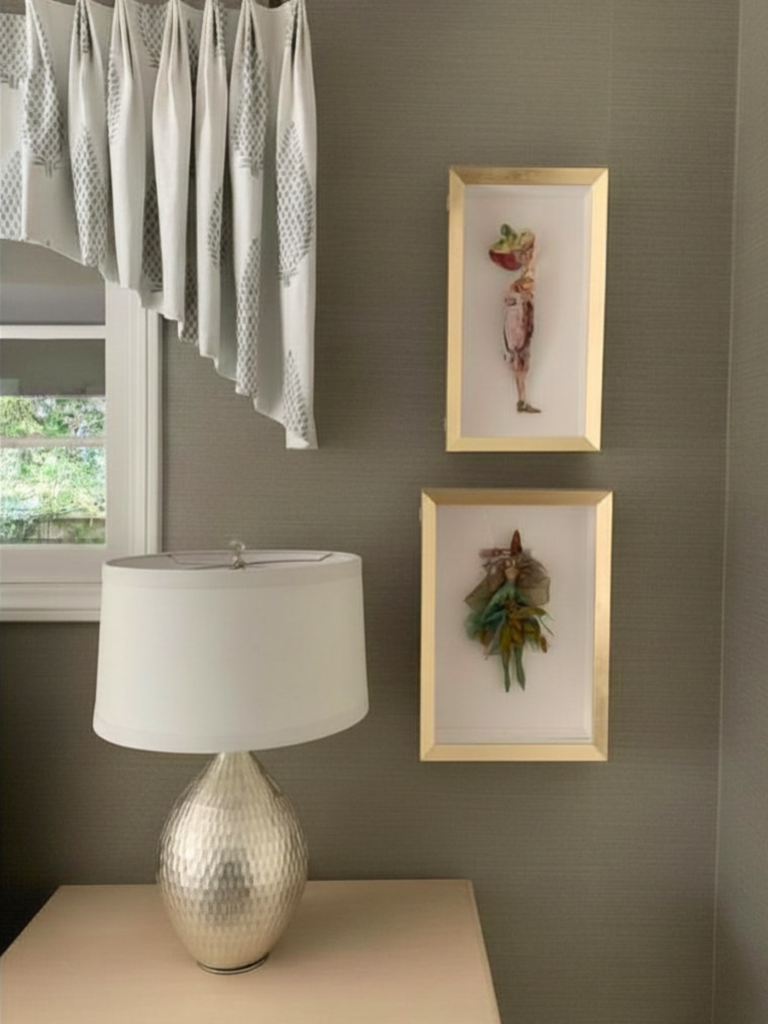
Whether it’s an original oil painting by a recognized artist or a finger painting by your toddler, its value ultimately depends on the person who owns it. Art doesn’t need a pedigree – or an impressive price tag – to deserve a place in your home.
I’ve framed menus, certificates and collectibles of all kinds. I’ve even framed a client’s corsage and her husband’s boutonniere from their senior prom, preserved for their 30th wedding anniversary. If something brings you joy, conjures a wonderful memory, tells a story or is simply beautiful to look at, it may be every bit as worthy of display as something hanging in a gallery.
And sometimes the most interesting art collections aren’t really “art collections” at all. They’re collections of things that mean something to the people who live there.
How to Curate an Art Collection Over Time

The best collections rarely happen all at once. They’re acquired over time – sometimes deliberately and sometimes quite unexpectedly.
You may fall in love with the work of a local artist, discover something while traveling, commission a piece specifically for your home, inherit something wonderful or suddenly realize that an object you’ve owned for years deserves to be treated as art. Rather than searching for something that simply “matches the room,” look for pieces that make you stop.
The common thread doesn’t have to be style, medium or even color. Over time, the collection itself becomes part of the story of the people who live there.
This is also why I don’t believe every empty wall needs to be filled immediately with the forever thing. Leaving a little room for something wonderful you haven’t found yet can produce a far more personal home than buying art simply because you need something that’s 48 inches wide and blue.
How to Display Art in Your Home
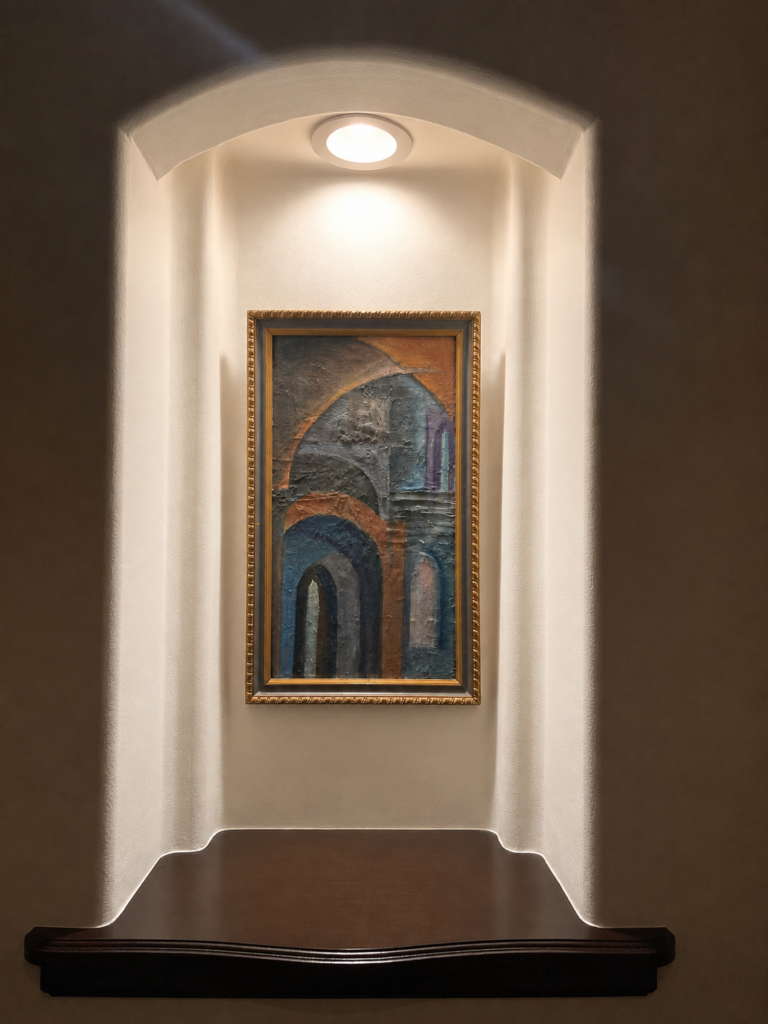
Once you’ve collected pieces you love, how you display them can completely change the way they are experienced. Scale matters, but bigger isn’t always better. A small piece given a little breathing room can command just as much attention as an oversized canvas.
Framing can elevate something wonderfully ordinary, while a collection of smaller pieces can have tremendous impact when grouped thoughtfully into a gallery wall. Placement matters, too. The relationship between the artwork, furniture, architecture and negative space around it is often what makes a piece feel as though it truly belongs.
Art Can Change How a Room Feels

Artwork can even change the way we perceive a space. A landscape, for example, can behave almost like a window on a blank wall – giving the eye somewhere to travel and helping a smaller room feel more expansive. A large abstract piece can establish movement or introduce colors that become the starting point for an entire palette. A collection of smaller works can turn an otherwise unremarkable wall into one of the most personal moments in the house.
This is one of the reasons art can be such a useful starting point in interior design. Rather than choosing artwork at the very end to fill whatever blank spaces remain, sometimes we do exactly the opposite: we let the art lead.
Does Your Art Need to Match Your Interior Design?
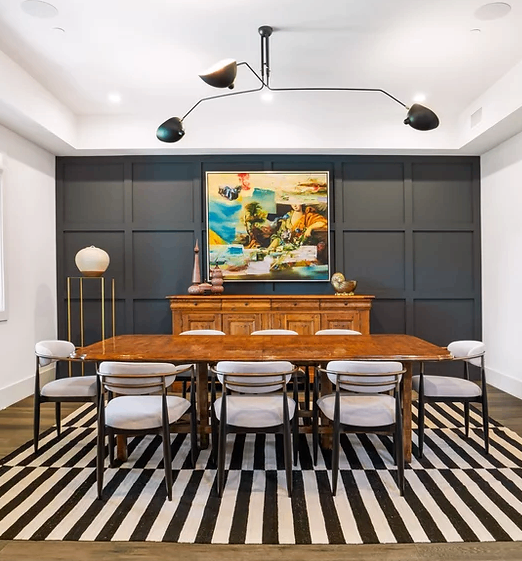
No – and often it can be more interesting when it doesn’t. Art doesn’t need to perfectly “match” the room. Sometimes a little tension is exactly what makes a space interesting.
A contemporary painting can be wonderful above an antique chest. Something primitive or textural can bring life to a polished room. A tiny, precious piece can sometimes be far more compelling than the enormous canvas you might expect to see in its place.
The trick is knowing which piece gets to be the star – and when adding one more thing is simply one thing too many.
A Home Collected Over Time
In closing, art is more than decoration. The pieces we collect become part of the story of our homes – and, very often, part of the story of our lives. That’s why some of my favorite rooms aren’t the ones where every piece was selected at once. They’re the rooms where something inherited sits beside something newly commissioned, something valuable hangs beside something sentimental, and somehow it all belongs together.
And if you have a piece you absolutely love but have absolutely no idea what to do with it? That happens to be one of my favorite kinds of design puzzle.
Pamela’s Favorite Art Tips
Have an Art or Design Puzzle of Your Own?
Sometimes all it takes is a fresh set of eyes. If you’re wondering where to hang a favorite piece, what your room is missing or how to pull it all together, let’s talk.


